

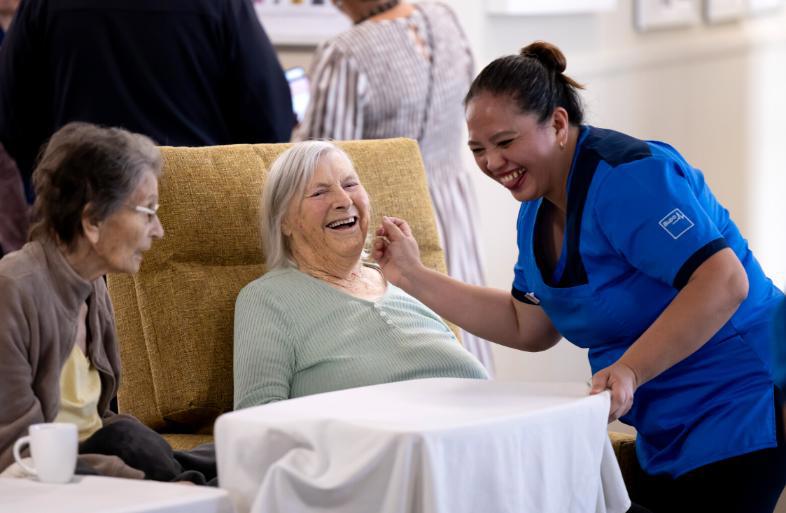
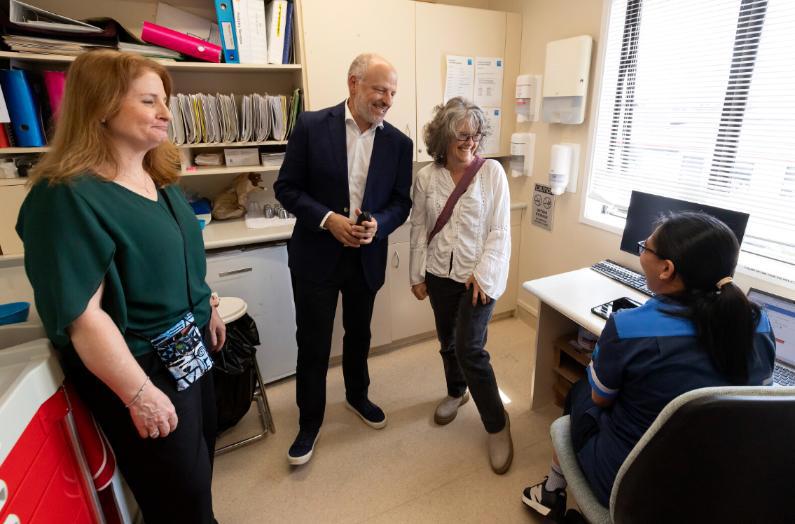
DEWS is a clinical decision-support system that helps care teams identify early and subtle signs a resident’s health may be declining. The system brings together key clinical observations, including changes in vital signs, behaviour, mobility and overall wellbeing, to generate an early warning score, alerting care teams when a resident may need further assessment or intervention.
By identifying potential deterioration earlier, the system supports faster clinical decision-making and escalation, helping ensure residents receive the right care at the right time.
“Caregivers often notice when something isn’t quite right with a resident, but it can be hard to articulate a hunch. This evidence-based system gives structure to those observations, helping translate that instinct into clinical information a
Registered Nurse can assess and act on,” says Sandy Turnwald, Clinical and Quality Director at Bupa New Zealand.
The digital system is based on the paper-based DEWS developed by Te Tāhū Hauora Health Quality & Safety Commission and the University of Auckland. It was trialled at Bupa Northhaven Care Home during a feasibility study that delivered strong results for both residents and the care team.
“Caregivers felt empowered because it improved communication and collaboration with registered nurses. It also built confidence within the nursing team by providing clear clinical decision pathways, strengthening decision-making and reducing the need for on-call clinical support,” Turnwald says.
The pilot also delivered measurable improvements in resident outcomes, including reductions in falls, behaviours, pressure injuries and the use of restraint. As a result, Bupa Northhaven is now a restraint-free care home.
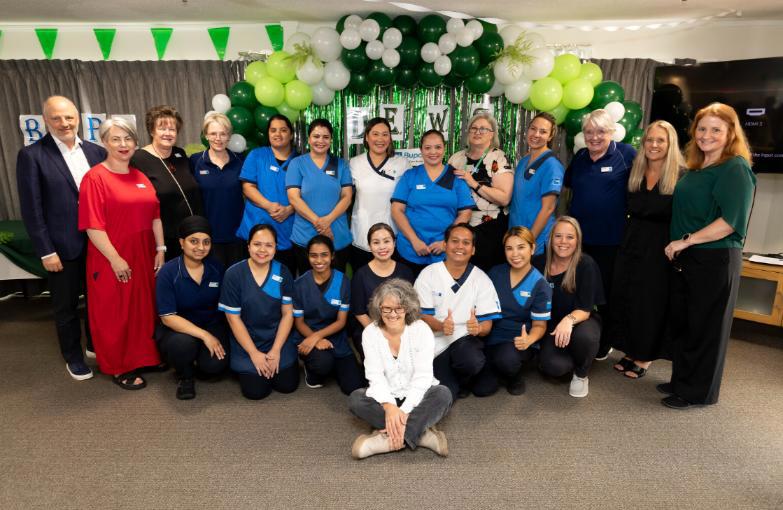
“This is the culmination of more than two years of collaboration with Nikki Grae and the team at the Health Quality & Safety Commission, Julie Daltrey from the University of Auckland, and VCare, so this launch is a significant milestone for all of us,” says Turnwald.
“This is the culmination of more than two years of collaboration with Nikki Grae and the team at the Health Quality & Safety Commission, Julie Daltrey from the University of Auckland, and VCare, so this launch is a significant milestone for all of us,” says Turnwald.
“When we were first approached by the Commission and the University of Auckland to participate in the feasibility study, we jumped at the opportunity and our team at Northhaven quickly put themselves forward.
“As we started to see the positive outcomes for our people and residents, it became clear how powerful DEWS could be, and that this was something we wanted to support becoming an industry standard. We are proud that it will be available to all VCare users, so its not just our 3000 residents benefiting but the whole sector.
“But the real power will come as we analyse data from across our 40 sites following the wider rollout to identify patterns, and other opportunities to further improve outcomes for residents.”


